

Immaculate Conception Catholic Church
Southampton
Holy Week & the Paschal Tridumm

HOLY WEEK
The week preceding Easter, from Passion (Palm) Sunday through Holy Saturday inclusive. During this week the Church commemorates the Passion of Christ, and all the ceremonies reflect this attitude of sorrow, yet joined with gratitude for God's mercy in becoming man in order to suffer and die for a sinful mankind.
PALM SUNDAY
The Sunday before Easter and the sixth and last of Lent, and the beginning of Holy Week. On this day the Church commemorates Christ's triumphal entry into Jerusalem, when olive and palm branches were strewn in his path. In the liturgy the memorial of this event is included in every Mass, with the procession.
THE SACRED PASCHAL TRIDUUM
Church solemnly celebrates the greatest mysteries of our redemption, the keeping by means of special celebrations the memorial of her Lord, crucified, buried and risen. A period of three days of prayer, either preceding some special feast or preparing for some major enterprise. Commemorates the biblical three days that Christ lay in the tomb. The Easter Triduum begins with the Evening Mass of the Lord's Supper on Holy Thursday, and reaches its high point in the Easter Vigil, and closes with Evening Prayer of Easter Sunday.
Mass of the Lord’s Supper (Maundy Thursday)
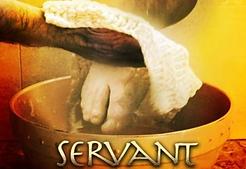
The anniversary of the Last Supper, when Christ instituted the Eucharist, the Sacrifice of the Mass, and the sacrament of the priesthood. On Tuesday, the blessing of the holy oils by Bishop Philip took place during the Chrism Mass in St John’s Cathedral Portsmouth. The Church's emphasis in the revised liturgy for Holy Thursday is on the institution of the priesthood.
Holy Thursday is the day on which Christ celebrated the Last Supper with His disciples, four days after His triumphal entry into Jerusalem on Palm Sunday. Only hours after the Last Supper, Judas would betray Christ in the Garden of Gethsemane, setting the stage for Christ's Crucifixion on Good Friday.
Holy Thursday is more than just the lead-in to Good Friday; it is, in fact, the oldest of the celebrations of Holy Week. And with good reason: Holy Thursday is the day on which Catholics commemorate the institution of three pillars of the Catholic Faith: the Sacrament of Holy Communion, the priesthood, and the Mass.
The Mass of the Lord's Supper, which is celebrated after sundown. It commemorates the institution of the Sacrament of Holy Communion, and it ends with the removal of the Body of Christ from the tabernacle in the main body of the church. The Eucharist is carried in procession to the altar of repose where it is kept overnight, to be distributed during the commemoration of the Lord's Passion on Good Friday.
ALTAR OF REPOSE AND NIGHT PRAYER
An invitation is extended to everyone to spend sometime in the presence of the Blessed Sacrament. The Church will remain open until Midnight and adoration will conclude with Night Prayer at 11:40pm.
The Passion of the Lord (celebrated at – 3:00pm)
GOOD FRIDAY
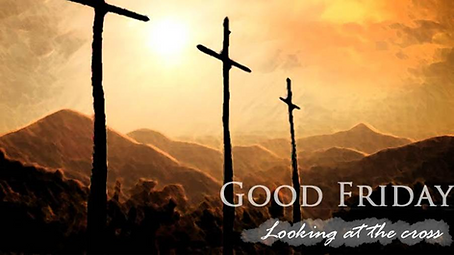
Good Friday, the Friday before Easter Sunday, commemorates the Passion and Death of our Lord Jesus Christ on the Cross. Good Friday is the second day of the Easter Triduum, the period from the Mass of the Lord's Supper on Holy Thursday through Easter Sunday. The Church is stripped of its ornaments, the altar bare, and with the door of the empty tabernacle standing open - is as if in mourning.
Good Friday is the day on which Jesus Christ, having been betrayed by Judas and sentenced to death by Pontius Pilate, was crucified for the sins of mankind. From the earliest days of Christianity, no Mass has been celebrated on Good Friday, since the Mass is a celebration both of the sacrifice of Christ on the Cross and of His Resurrection. On Good Friday, the entire Church fixes her gaze on the Cross at Calvary. Each member of the Church tries to understand at what cost Christ has won our redemption.
Friday in Holy Week, anniversary of Christ’s death on the Cross, and a day of fast and abstinence from the earliest Christian times. Fasting and Abstinence in the Catholic Church, Good Friday is a day of strict fasting and abstinence. Catholics over the age of 18 and under the age of 60 are required to fast, which means that they can eat only one complete meal and two smaller ones during the day, with no food in between. Catholics who are over the age of 14 are required to refrain from eating any meat, or any food made with meat, on Good Friday.
In the new liturgy, since the Second Vatican Council, the ceremonies consist of a reading of the Gospel according to St. John, special prayers for the Church and the people of all classes of society, the veneration of the Cross, and a Communion service at which all may receive the Eucharist. Good Friday remains the only day in the year on which Mass is not celebrated in the Roman Rite.
The Easter Vigil (celebrated at – 8:00pm)

HOLY SATURDAY
The eve of Easter, and the day that Christ remained in the tomb. In the early Church no Mass was offered, with services starting about three o'clock in the afternoon and ending with the Mass of the Resurrection on Easter morning. The present Easter Vigil is an approximation of this ancient rite.
EASTER
The day commemorating Christ's Resurrection from the dead. It is the greatest of all Christian festivals, having the central place in the liturgical year. It is the Christian feast linked with the Jewish Pasch. The exultant Alleluia is constantly repeated in the Mass and Divine Office, the Vidi Aquam replaces the Asperges, and the Regina Coeli the Angelus. The Easter season continues from Easter Sunday to Trinity Sunday inclusive.
EASTER VIGIL
The ceremonies of Holy Saturday and the most solemn memorial of the liturgical year. They consist of four parts: Service of the Light, Liturgy of the Word, Liturgy of Baptism, and Liturgy of the Eucharist. The entire celebration takes place at night, and therefore it should not begin before nightfall and should end before dawn on Easter Sunday. In the early Church the night before Easter was celebrated by the illumination of the churches and even of whole cities. The revised Easter Vigil services include ceremonies that go back to the first centuries of the Christian era and stress the Church's joy in commemorating the night that Christ rose from the dead.
EASTER SUNDAY
Easter is the greatest feast in the Christian calendar. On this Sunday, Christians celebrate the resurrection of Jesus Christ from the dead. For Catholics, Easter Sunday comes at the end of 40 days of prayer, fasting, and almsgiving known as Lent. Through spiritual struggle and self-denial, we have prepared ourselves to die spiritually with Christ on Good Friday, the day of His Crucifixion, so that we can rise again with Him in new life on Easter.
SECOND SUNDAY OF EASTER (DIVINE MERCY SUNDAY – SUNDAY 12 APRIL)

DIVINE MERCY
The message of The Divine Mercy is simple. It is that God loves us – all of us. And, he wants us to recognize that His mercy is greater than our sins, so that we will call upon Him with trust, receive His mercy, and let it flow through us to others. Thus, all will come to share His joy.
The Divine Mercy message is one we can call to mind simply by remembering ABC:
A - Ask for His Mercy. God wants us to approach Him in prayer constantly, repenting of our sins and asking Him to pour His mercy out upon us and upon the whole world.
B - Be merciful. God wants us to receive His mercy and let it flow through us to others. He wants us to extend love and forgiveness to others just as He does to us.
C - Completely trust in Jesus. God wants us to know that the graces of His mercy are dependent upon our trust. The more we trust in Jesus, the more we will receive.